
Who Pays for the Expert Inspection in a Construction Defect Case?

By Milan Chatterjee | Founding Attorney, Milan Legal
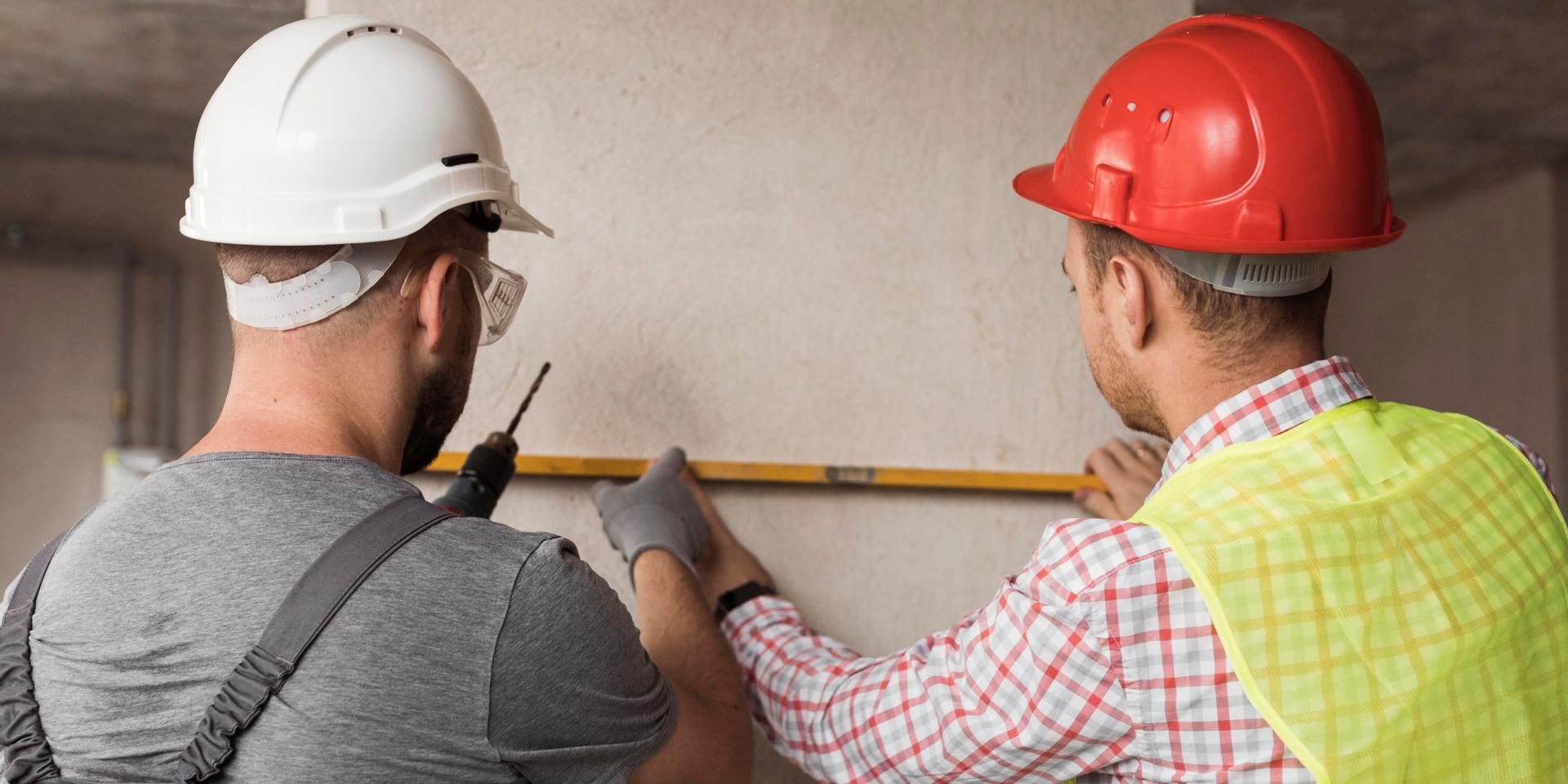
You have discovered cracks, water intrusion, roofing problems, foundation movement, stucco failures, or another serious problem with your home. The builder disputes responsibility, and now someone is telling you that you need an expert inspection.
Then comes the question most homeowners ask:
“Who is going to pay for that?”
The answer depends on the circumstances, the type of inspection, the attorney’s fee arrangement, and how the claim develops. In many construction-defect cases, an expert inspection is an important early investment because the expert may help determine whether the problem is actually a construction defect, what caused it, how extensive the damage is, and what it may cost to repair.
Nevada’s Chapter 40 process also specifically contemplates inspection of alleged constructional defects before a covered construction-defect action proceeds.
If you are dealing with a serious construction problem in Las Vegas or Reno, our Construction Defect Litigation page explains the broader legal process.
The important thing to understand is that an expert’s bill and your attorney’s bill are two different things. A contingency-fee arrangement with a lawyer does not automatically mean every expert expense is free or that the expert is paid only if you win.
Why Do You Need an Expert in the First Place?
A homeowner can usually identify that something looks wrong.
A professional needs to determine why it is wrong.
That distinction can be critical.
For example, you may see cracks in your stucco and reasonably believe the builder did something incorrectly. But the builder could argue that the cracks are normal settlement, improper homeowner maintenance, landscaping-related movement, or another non-construction issue.
An independent expert can investigate the condition and provide a professional opinion.
Depending on the defect, the expert could be an engineer, architect, building consultant, roofing specialist, envelope consultant, or another qualified professional.
The expert may evaluate:
- The nature of the defect.
- The likely cause.
- The extent of the damage.
- Whether other components are affected.
- Whether the condition violates applicable standards or codes.
- The appropriate method of repair.
- The estimated repair cost.
That information can be useful long before anyone files a lawsuit.
Is an Expert Inspection Required Under Nevada Chapter 40?
The Chapter 40 process involves inspection, but that does not necessarily mean a homeowner must independently hire an expert before sending every notice.
Under NRS 40.647, a claimant generally must allow the contractor to inspect the alleged constructional defects and must be present, or have a representative present, to identify the proximate locations of the defects, damage, or injuries described in the notice. The claimant must also allow a reasonable opportunity to repair if the contractor elects to do so.
That is different from an independent expert evaluation performed for the homeowner.
The builder may conduct its own inspection.
You may still want your own expert to determine whether the builder’s conclusions and proposed repair are technically sound.
Those are separate functions.
Who Usually Pays the Expert Upfront?
In many cases, the homeowner or the homeowner’s attorney initially arranges payment for the independent expert.
There is no universal rule that automatically requires the builder to pay for your expert inspection simply because you have alleged a construction defect.
The actual arrangement can vary.
For example, your attorney may have an established relationship with qualified experts and may arrange the inspection as part of the representation.
In other situations, the homeowner may need to pay the expert directly.
The important question to ask your attorney is:
“How are expert expenses handled under my fee agreement?”
Do not assume that “contingency” means there are no upfront or case-related expenses.
Not Sure Who Should Pay for Your Expert Inspection?
Does a Contingency Fee Cover Expert Costs?
Not necessarily.
A contingency-fee agreement generally explains how the attorney’s fees are calculated if the case produces a recovery.
But litigation also involves case expenses.
Those can include expert fees, inspections, testing, filing fees, court costs, deposition expenses, travel, document reproduction, and other expenditures.
Some law firms advance certain litigation expenses and seek reimbursement from a recovery.
Others may require the client to pay certain expenses as they arise.
The agreement should explain the arrangement.
Before hiring a lawyer for a construction-defect matter, ask specifically:
Who pays the expert?
Who pays for destructive testing?
Who pays for engineering reports?
Who pays if the case does not recover money?
Are these expenses reimbursed from a settlement or judgment?
Those questions can prevent an unpleasant financial surprise later.
How Much Does a Construction Defect Expert Cost?
There is no single standard price.
The cost depends heavily on the defect and the amount of work required.
A relatively straightforward inspection may cost far less than a complicated investigation involving multiple building systems, destructive testing, laboratory analysis, engineering calculations, or a detailed repair estimate.
The expert may charge:
- A flat inspection fee.
- An hourly consulting rate.
- A minimum site-visit charge.
- Separate fees for testing.
- Additional fees for written reports.
- Separate deposition or trial testimony fees.
Before authorizing substantial work, ask for an estimate or fee structure.
A $500 consultation and a $20,000 comprehensive investigation are obviously very different financial decisions.
The expert should explain what is included in the proposed scope.
Do You Need the Most Expensive Expert?
Not necessarily.
The objective is not to hire the most expensive consultant.
It is to hire an expert with the right qualifications for the defect.
A structural engineer may be appropriate for certain foundation or framing concerns.
A building-envelope specialist may be more appropriate for water intrusion involving stucco, windows, flashing, and exterior walls.
A roofing specialist may be appropriate for certain roof failures.
The expert’s qualifications should match the technical issue.
An inexpensive inspection that does not identify the actual cause can ultimately be more expensive than a properly scoped investigation.

When Is an Expert Inspection Worth the Cost?
An expert inspection can be particularly valuable when the alleged defect is:
Expensive.
If the potential repair could cost tens or hundreds of thousands of dollars, spending money to determine whether a viable claim exists may be sensible.
Hidden.
If the suspected defect is behind walls, under flooring, beneath stucco, or inside another building component, professional investigation can be essential.
Disputed.
If the builder is already saying the problem is not its responsibility, independent evidence can help determine whether that position is supported.
Systemic.
If similar defects appear throughout a development, an expert can help determine whether the issue is isolated or part of a broader construction problem.
Potentially structural.
Foundation, framing, structural, and load-bearing issues should not be evaluated solely by visual observation.
What If the Builder Offers to Inspect the Property for Free?
You can generally allow the builder to conduct its inspection as part of the Chapter 40 process.
But understand what that inspection is designed to accomplish.
The builder is evaluating a claim against the builder.
That does not automatically make the builder’s inspection unreliable. In fact, the statutory process specifically provides contractors an opportunity to inspect and respond.
But you should still preserve your own evidence.
Take photographs and videos.
Keep previous inspection reports.
Document when the problem appeared.
Save communications with the builder.
If the builder says there is no defect, an independent expert may be particularly valuable.
What If the Builder Says the Problem Is “Normal”?
This is a common point of disagreement.
A builder might describe cracks as ordinary settlement.
A homeowner might believe the cracks demonstrate defective construction.
Neither statement, by itself, proves the issue.
The expert needs to evaluate the actual condition.
The same principle applies to water intrusion.
A builder may say that a leak is caused by homeowner maintenance.
An independent expert may identify improper flashing or installation.
The purpose of the inspection is to move the discussion away from assumptions and toward evidence.
Should You Get an Inspection Before Sending a Chapter 40 Notice?
Sometimes it makes sense; sometimes it may not be necessary.
The answer depends on how much is already known about the defect.
NRS 40.645 requires a claimant’s notice to describe the defects or resulting damage or injuries with reasonable detail and to describe the cause if the cause is known. It also requires a description of the known nature and extent of resulting damage or injury.
If the homeowner already has enough information to provide a meaningful notice, an expert investigation may not need to be completed first.
But if the problem is complicated and the homeowner cannot reasonably identify what is wrong, an expert can help make the notice more accurate.
The key is to avoid both extremes:
Do not guess at technical causes.
Do not delay indefinitely while waiting for perfect information.
What About Destructive Testing?
Some defects cannot be properly evaluated without opening or removing part of the structure.
For example, determining why water is entering behind stucco may require limited destructive testing.
That can increase the expert cost.
It can also create additional questions:
Who authorizes the testing?
Who pays for it?
Who restores the property afterward?
Is the testing necessary?
How much of the property needs to be opened?
Before destructive testing begins, these issues should be discussed and documented.
If the builder is already involved in the Chapter 40 process, coordination can also be important so that the inspection does not unnecessarily interfere with the statutory procedure.
Can You Recover Expert Costs Later?
Potentially, but you should not assume that every dollar spent on an expert will automatically be reimbursed.
Whether expert expenses are recoverable can depend on the applicable claims, statutes, contractual provisions, court rules, settlement terms, and the circumstances of the case.
Nevada’s Chapter 40 statutes contain provisions concerning attorney’s fees and costs in certain construction-defect cases, including consequences related to settlement offers.
The recoverability of a particular expert expense should therefore be discussed with counsel.
The safest approach is to treat the expert investigation as a potentially necessary case expense, not money you are guaranteed to get back.
Concerned About the Cost of an Expert Inspection?
What If the Expert Says There Is No Construction Defect?
That can actually be a valuable result.
It may prevent you from spending substantially more money pursuing a weak claim.
Not every crack, leak, or building problem is necessarily a legally actionable construction defect.
An independent expert may conclude that the condition is normal, maintenance-related, caused by another party, or otherwise not attributable to defective construction.
Learning that early can save significant litigation expense.
An expert is not simply someone you hire to prove that the builder is wrong.
The expert’s job is to provide an independent technical evaluation.

What If the Expert Confirms a Serious Defect?
Then the report can become an important part of the claim.
The expert may identify the defect, explain its cause, estimate the scope of repairs, and provide technical support for the homeowner’s position.
That information can help with:
- Chapter 40 negotiations.
- Repair discussions.
- Settlement evaluation.
- Damages analysis.
- Mediation.
- Litigation strategy.
The report may also help your attorney identify which parties could potentially be responsible.
A significant construction defect can involve more than the general contractor. Depending on the circumstances, subcontractors, suppliers, architects, engineers, or other parties may become relevant.
Should You Pay for the Expert Before Talking to a Lawyer?
Not always.
If the defect is significant and you are considering litigation, speaking with a construction-defect attorney early can help you determine what type of expert is actually needed.
Otherwise, you may spend money on the wrong type of inspection.
For example, a general home inspector may document visible problems but may not be qualified to provide the engineering analysis necessary for a complicated structural or building-envelope dispute.
The right expert should be selected based on the legal and technical issues involved.
Questions to Ask Before Hiring an Expert
Before authorizing an inspection, ask what the expert will actually do.
Will the expert perform only a visual inspection?
Will testing be required?
Will the expert provide a written report?
Will the expert estimate repair costs?
Will the expert testify if the matter goes to litigation?
What is included in the quoted fee?
What expenses are separate?
How long will the investigation take?
The answers can make the difference between a useful investigation and an unexpectedly expensive one.
How a Nevada Construction Defect Attorney Can Help With Expert Costs
A construction-defect attorney can help determine whether expert involvement is appropriate and what type of expert is best suited to the problem.
The attorney can also explain how expert fees fit within the firm’s fee arrangement and whether the firm advances particular case expenses.
For homeowners in Las Vegas and Reno, early coordination between the attorney and construction expert can also help prevent duplicated inspections and unnecessary costs.
The objective is not simply to spend money on experts.
It is to spend the right amount of money to obtain the technical evidence needed to evaluate the claim.
Frequently Asked Questions
There is no universal rule requiring the builder to pay for a homeowner’s independent expert inspection. Depending on the representation and circumstances, the homeowner or attorney may initially arrange and pay for the expert as a case expense.
Not necessarily. Attorney fees and litigation expenses are different. A contingency agreement may explain how expert fees and other case expenses are advanced and reimbursed. Review the fee agreement carefully.
There is no standard price. Costs depend on the defect, expert qualifications, inspection scope, testing, written reports, repair estimates, and whether the expert later needs to provide testimony.
Not necessarily. NRS 40.645 requires the notice to describe known defects, damage, injuries, and known causes with reasonable detail. An expert can be helpful when the technical nature of the defect makes that difficult, but every claimant does not necessarily need a completed expert investigation before giving notice.
Potentially, depending on the claims, applicable law, settlement, and circumstances. Expert expenses should not be assumed to be automatically recoverable simply because the expert supports your position.
For a significant defect, it can be useful to speak with a construction-defect attorney first. Counsel can help determine what type of expert is appropriate and whether the proposed inspection will provide evidence that is useful to the potential claim.
About Milan Chatterjee
This article was prepared by Milan Chatterjee, a Nevada and California licensed attorney and founder of My Real Estate Lawyer, a real estate law practice dedicated to protecting property owners, investors, homeowners, businesses, and other clients throughout Nevada.
Milan represents clients in matters involving construction defect litigation, real estate disputes, purchase and sale agreements, property transfers, title disputes, partition actions, boundary and easement disputes, landlord-tenant matters, HOA disputes, and complex real estate ownership conflicts.
He earned his Juris Doctor from UCLA School of Law and studied at New York University School of Law as a visiting student. Before entering private practice, he served as Associate Compliance Counsel at Las Vegas Sands Corporation, where he advised on corporate governance, regulatory compliance, investigations, and risk management.
Today, through My Real Estate Lawyer, Milan helps homeowners, buyers, investors, sellers, HOA boards, and property owners throughout Las Vegas, Reno, and Nevada navigate complex real estate disputes and protect their property rights.
Need Help Evaluating a Construction Defect?
An expert inspection can help identify the cause and extent of a potential construction defect. Get legal guidance before moving forward with a major investigation.
Conclusion
There is no universal rule saying that a builder must pay for your independent construction-defect expert.
In many cases, the homeowner or the homeowner’s attorney initially arranges for the expert and handles the expense under the terms of the representation agreement.
The cost can vary substantially depending on the defect, the expert’s qualifications, testing requirements, the need for a written report, and whether litigation testimony becomes necessary.
Nevada’s Chapter 40 process separately provides for inspections by the parties involved in the claim and establishes procedures that should be followed before covered construction-defect litigation proceeds.
If your builder is disputing a serious defect, do not focus only on the price of the inspection.
Ask what the inspection can tell you.
If it identifies the cause, documents the damage, evaluates the repair, and determines whether the problem is actually a construction defect, that information can be critical to deciding what to do next.
And before spending thousands of dollars on an investigation, understand who is paying, what the expert will deliver, and how the expense fits into your overall legal strategy.

Get Immediate Legal Help
Free, confidential. We respond within minutes.
Related Blogs
