
Signs of Foundation Problems in Las Vegas Homes

By Milan Chatterjee | Founding Attorney, Milan Legal
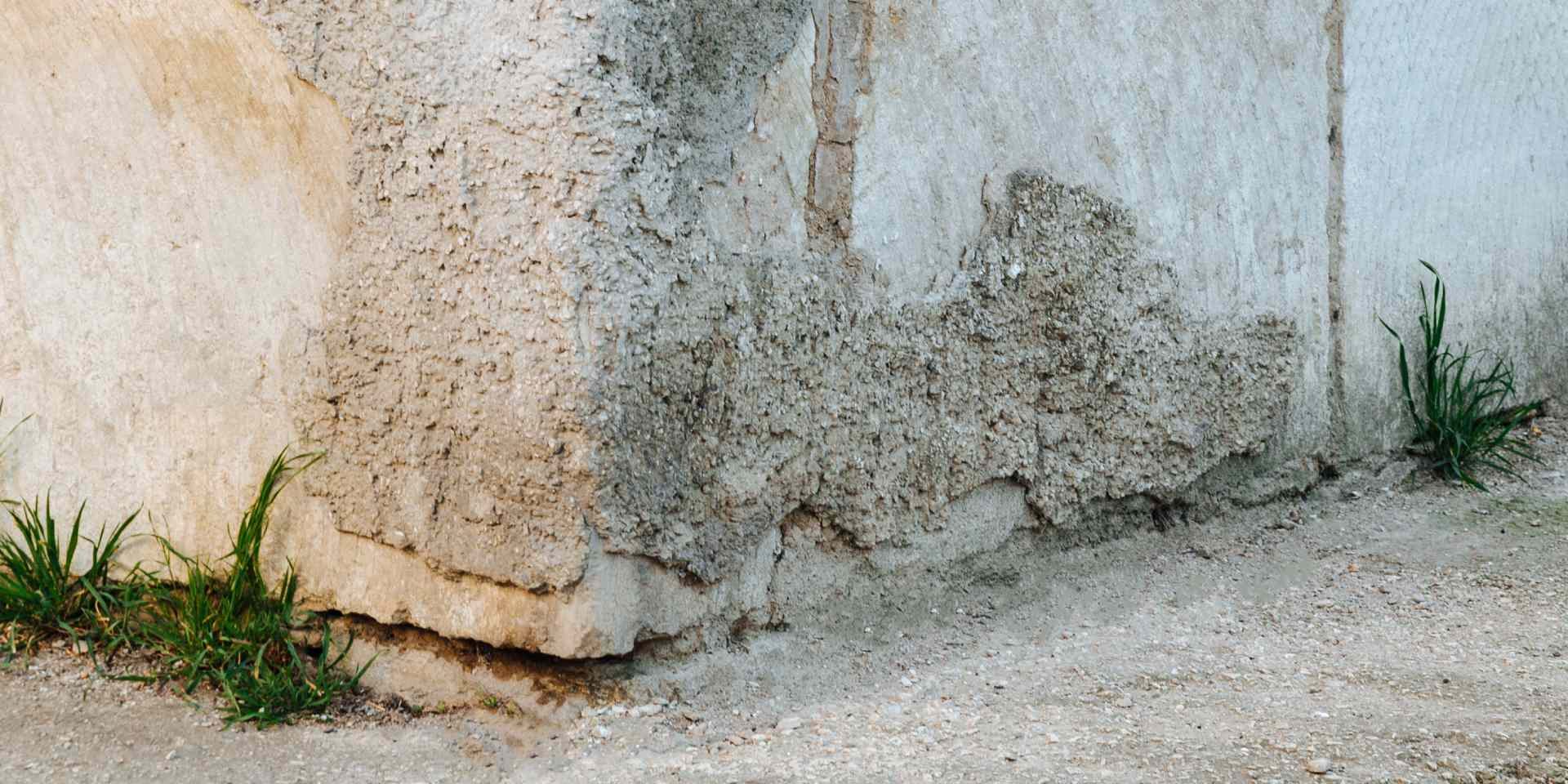
A small crack in a wall or floor does not automatically mean your Las Vegas home has a foundation problem. Homes move, materials expand and contract, and some settlement can occur as a structure ages.
But some warning signs deserve more attention than others. Cracks that continue growing, floors that become noticeably uneven, doors that suddenly stop closing properly, gaps around windows, or recurring movement in different areas of the home can indicate a deeper problem.
Las Vegas also has a genuinely local consideration: soil conditions and ground movement can affect structures in the Las Vegas Valley. Nevada geological research identifies expansive and collapsible soils in the Las Vegas Valley, including soils containing gypsum, while state geological studies have also documented land subsidence and ground movement in the valley.
If you suspect that your home’s foundation or structural components were improperly designed or constructed, our Construction Defect Litigation page explains the broader legal options available for qualifying Nevada construction-defect claims.
The important point is this: a foundation problem is a technical issue first and a legal issue second. You need to determine what is actually happening before deciding whether the builder, contractor, engineer, or another party may be responsible.
Why Foundation Problems Can Be Complicated in Las Vegas
Foundation movement is not always caused by defective construction.
That distinction matters.
Ground conditions, drainage, changes in moisture, landscaping, plumbing leaks, natural settlement, poor maintenance, and construction practices can all potentially contribute to movement.
Nevada’s geological materials specifically recognize expansive soils as soils that can swell or shrink when their moisture content changes. The Nevada Bureau of Mines and Geology also identifies collapsible soils in the Las Vegas Valley, including gypsum-bearing soils.
That means seeing a crack does not tell you the entire story.
The real question is:
What caused the movement, and is the condition consistent with a construction defect?
A qualified structural engineer or other appropriate expert may be needed to answer that question.
1. Cracks in Foundation Walls or Slabs
Cracks are among the most obvious warning signs.
But not all cracks mean the same thing.
A thin, isolated crack may be relatively minor. A crack that is widening, recurring after repair, or accompanied by other movement deserves closer attention.
Pay particular attention to:
- Cracks that appear suddenly.
- Cracks that continue to grow.
- Long cracks extending across a wall or slab.
- Cracks that are wider at one end.
- Cracks accompanied by visible displacement.
- Multiple cracks appearing in different areas.
The location matters as well.
A crack in a nonstructural finish is different from cracking that affects a foundation wall, structural component, or slab.
Do not try to determine the seriousness of a foundation problem based solely on the width of a crack.
The pattern, location, direction, movement, surrounding conditions, and underlying cause can all matter.
2. Doors and Windows Suddenly Stop Working Properly
A door that sticks occasionally is not necessarily evidence of foundation movement.
But if several doors or windows suddenly become difficult to open or close, pay attention.
Foundation or structural movement can alter the geometry of a building.
That can produce symptoms such as:
- Doors rubbing against frames.
- Doors that no longer latch.
- Windows that become difficult to open.
- Gaps appearing around frames.
- Frames appearing visibly out of square.
The important factor is change.
If a door has always been slightly difficult to close, that is different from a door that worked normally for years and suddenly begins binding while other parts of the house are also showing movement.
Seeing Multiple Signs of Foundation Movement?
3. Uneven or Sloping Floors
A floor that feels uneven can have many explanations.
Flooring materials can settle or deteriorate. Framing can move. Moisture can affect certain materials.
But a noticeable slope, dip, or change in elevation can also indicate structural movement.
You may notice it because furniture no longer sits level or because you can feel a slope while walking across a room.
If the slope appears alongside foundation cracks, wall cracking, sticking doors, or exterior movement, an expert evaluation becomes more important.
A professional can use appropriate measurement equipment to determine whether there is actual elevation change and whether the pattern suggests foundation or structural movement.
4. Gaps Around Windows, Doors, or Walls
New gaps can be another warning sign.
Look around:
- Window frames.
- Door frames.
- Baseboards.
- Interior corners.
- Exterior trim.
- Areas where walls meet ceilings.
A small cosmetic gap does not necessarily indicate a foundation defect.
But multiple new gaps appearing throughout the home may indicate movement that deserves investigation.
Photograph the gaps when you first notice them.
If possible, take additional photographs later from the same angle.
That creates a visual record showing whether the condition is changing.
5. Cracks Above Doors and Windows
Cracks around openings can be particularly useful to document.
Windows and doors interrupt a wall’s continuous structure, so movement can produce cracking around these areas.
Again, the existence of a crack does not prove defective construction.
But if cracks repeatedly appear around multiple openings, especially in combination with other symptoms, an expert should evaluate the pattern.
Do not simply patch the crack and repaint it without documenting the original condition.
If the underlying movement continues, cosmetic repairs can erase evidence that may later help determine what happened.
6. Exterior Cracks or Separation
Do not inspect only the inside of the house.
Walk around the exterior.
Look for:
- Cracks in exterior walls.
- Separation around windows.
- Gaps where exterior materials meet.
- Cracking near corners.
- Separation between structures and attached features.
- Changes in exterior grading.
- Cracking in patios or other appurtenances.
A pattern of exterior and interior movement can provide more information than either condition alone.
This is particularly important in newer homes where the owner may reasonably expect the structure to have been properly designed and constructed.
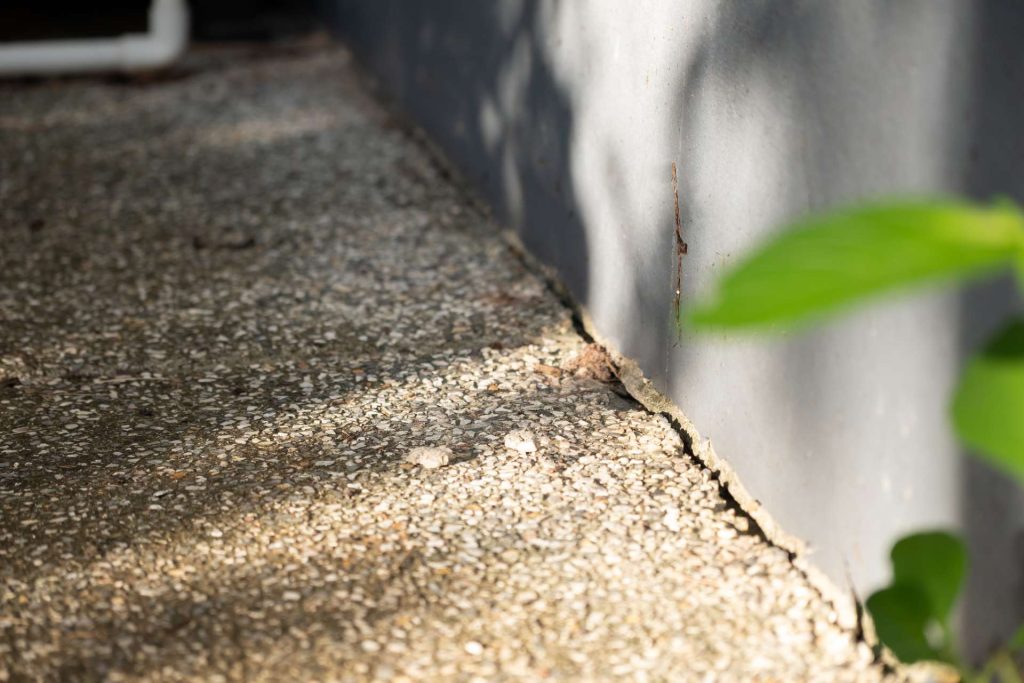
7. Cracks in the Garage Slab
Garage slabs can provide useful clues.
Cracking in a garage floor is not automatically a foundation defect. Concrete commonly develops cracks for various reasons.
But pay attention if the cracking is accompanied by:
- Vertical displacement.
- Significant separation.
- Changes in the garage structure.
- Cracking in nearby walls.
- Doors that no longer operate normally.
- Evidence of ongoing movement.
A structural expert can determine whether the slab condition appears consistent with ordinary concrete behavior or something more significant.
8. Water or Drainage Problems Near the Foundation
Water management can be particularly important when evaluating foundation movement.
Changes in moisture around a structure can affect certain soil conditions.
Look at the areas surrounding the home.
Are gutters directing water toward the foundation?
Does water collect near the house?
Does irrigation repeatedly saturate one side of the property?
Has the grading changed?
Are there plumbing leaks?
These questions can help identify possible causes.
This is another reason not to immediately assume that every foundation problem is a construction defect.
An expert needs to distinguish between a problem caused by the original construction and a condition caused later by drainage, maintenance, landscaping, or another factor.
9. A Foundation Problem That Keeps Coming Back After Repair
Repeated repairs are important evidence.
Suppose a builder fills a crack.
A few months later, the same crack reappears.
The crack is repaired again.
Then additional cracking develops nearby.
At some point, the question should change from:
“How do we repair this crack?”
to:
“Why does this keep happening?”
Repeated cosmetic repairs can sometimes conceal the history of a developing problem.
Keep records of every repair.
Save invoices, photographs, builder correspondence, inspection reports, and warranty communications.
If the same problem keeps returning, that history may help an expert determine whether there is an underlying movement issue.
10. Cracks Combined With Multiple Other Symptoms
One isolated symptom may not tell you much.
A pattern can tell you considerably more.
For example, suppose you have:
- A growing foundation crack.
- Uneven floors.
- Doors that no longer close.
- Gaps around window frames.
- Cracking in exterior walls.
That combination deserves more attention than any one symptom by itself.
The more independent signs appear together, the stronger the reason to obtain a professional evaluation.
This does not mean you should automatically conclude that the builder is responsible.
It means there is enough evidence to investigate the cause properly.
Las Vegas Soil Conditions Matter
The Las Vegas Valley has geological characteristics that can be relevant to foundation performance.
The Nevada Bureau of Mines and Geology identifies expansive soils and collapsible soils among the geological hazards present in Nevada. Its materials specifically identify gypsum-bearing collapsible soils in the Las Vegas Valley.
The state geological survey has also studied land subsidence in the Las Vegas Valley, including groundwater-withdrawal-related movement and earth fissures.
This does not mean every Las Vegas home with a crack has a soil problem.
It does mean that soil and ground conditions can be part of a serious foundation investigation.
An expert may need to consider site conditions, drainage, grading, original geotechnical information, foundation design, construction records, and the actual pattern of movement.
Is Every Foundation Problem a Construction Defect?
No.
This distinction is critical.
Nevada’s statutory definition of a constructional defect includes certain defects in the design, construction, manufacture, repair, or landscaping of a residence or appurtenance that present an unreasonable risk of injury to a person or property or were not completed in a good and workmanlike manner and proximately caused physical damage.
So a foundation problem may potentially be related to defective design or construction.
But other causes can exist.
For example, an issue might result from:
- Ordinary settlement.
- Soil movement unrelated to construction.
- Improper drainage after construction.
- Landscaping changes.
- Plumbing leaks.
- Lack of maintenance.
- Alterations made by a homeowner.
The cause must be investigated before assigning responsibility.
What If the Home Is New?
New construction does not guarantee that foundation problems cannot occur.
In fact, a significant problem appearing relatively soon after construction may make it particularly important to preserve construction records and investigate how the home was designed and built.
Look for documents such as:
- Original inspection reports.
- Geotechnical reports.
- Builder warranty documents.
- Closing documents.
- Repair records.
- Photographs taken during construction.
- Communications with the builder.
- Prior inspection reports.
If the builder previously repaired the same condition, preserve those records as well.
Should You Call the Builder First?
You can notify the builder of the problem, particularly if the home is covered by a warranty.
But avoid destroying evidence while trying to fix the problem yourself.
Take photographs and videos before making significant repairs.
If the condition appears serious, consider getting an independent professional evaluation.
Nevada’s Chapter 40 process also contains specific notice and inspection requirements for covered construction-defect claims. Under NRS 40.645, a claimant generally must provide statutory written notice before commencing a covered action, and the notice must describe the defects and known damage with reasonable detail.
Under NRS 40.647, the claimant generally must allow an inspection and provide a reasonable opportunity to repair when the responsible party elects to do so.
That process should be handled carefully if litigation is being considered.
Should You Get a Structural Engineer?
If you suspect a genuine foundation or structural problem, a qualified structural engineer may be appropriate.
The purpose is not simply to obtain a report saying, “There are cracks.”
You want to understand:
What is moving?
Why is it moving?
Is the movement active or historical?
Is the structure damaged?
What additional investigation is needed?
What repairs are appropriate?
What will those repairs cost?
Those answers are much more useful than a generic home inspection that simply identifies visible cracking.
The appropriate expert depends on the suspected problem.

What If the Builder Wants to Repair the Foundation?
Do not automatically refuse the repair.
But do not automatically accept it without understanding the proposed work.
Ask what caused the problem according to the builder.
Ask what work will be performed.
Ask whether the proposed repair addresses the underlying cause.
Ask whether an engineer has evaluated the repair design.
And document the condition before work begins.
Nevada’s Chapter 40 repair provisions require elected repairs to comply with applicable building codes and be performed in a good and workmanlike manner consistent with generally accepted industry standards for that type of repair.
The repair process should therefore be documented carefully.
What If the Builder Says It Is Just Normal Settlement?
Normal settlement is a legitimate possibility.
Nevada’s construction-defect framework specifically recognizes normal shrinkage, swelling, expansion, or settlement among conditions that can affect the application of the statutory framework.
But the label “normal settlement” does not itself establish that the condition is normal.
If the builder uses that explanation, ask what evidence supports it.
Is there an engineering evaluation?
Are the cracks stable?
Is there measurable movement?
Are there related symptoms?
Is the condition consistent with the original design and soil conditions?
An independent expert can help answer those questions.
Not Sure Who Is Responsible for the Foundation Problem?
How Much Evidence Should You Preserve?
Start documenting now.
Take photographs from multiple distances.
Photograph the entire wall or room as well as close-ups of the defect.
Record measurements when appropriate.
Keep a dated log showing when you noticed changes.
Save all communication with the builder.
Keep repair invoices and inspection reports.
If the problem changes, photograph it again.
This documentation can help an engineer understand the progression of the condition and can become important evidence if a legal dispute develops.
What If the Foundation Problem Is a Construction Defect?
If an expert concludes that the problem resulted from defective design or construction, the legal analysis becomes more important.
Potentially responsible parties could include the builder, contractor, subcontractors, design professionals, or other participants depending on the facts.
Nevada’s Chapter 40 process generally requires notice before a covered construction-defect action and provides opportunities for inspection and repair.
There are also time limits that can affect construction claims.
For example, NRS 11.202 generally bars actions for specified construction deficiencies more than 10 years after substantial completion, subject to statutory exceptions, and NRS 11.2055 establishes rules for determining substantial completion.
That is one reason homeowners should not wait indefinitely while a foundation problem develops.
What If the Problem Is Serious but You Are Not Sure It Is a Defect?
That is exactly when an investigation can be useful.
You do not need to know the legal conclusion before seeking technical information.
Start with the physical condition.
Determine what is happening.
Identify the likely cause.
Then determine whether the evidence supports a construction-defect claim.
This approach is more reliable than beginning with the assumption that either the builder or the homeowner is responsible.
How a Nevada Construction Defect Attorney Can Help
A construction-defect attorney can help evaluate the legal side of a potential foundation claim while working with appropriate technical professionals to understand the physical problem.
That can include reviewing the purchase documents, builder warranty, inspection reports, repair history, construction records, engineering findings, and applicable Nevada deadlines.
For homeowners in Las Vegas and Reno, this is particularly important when foundation movement may involve local soil or drainage conditions.
The goal is not to turn every crack into a lawsuit.
It is to determine whether the problem is ordinary, repairable, construction-related, or potentially a significant defect requiring legal action.
Frequently Asked Questions
Common warning signs can include recurring or growing cracks, uneven floors, doors or windows that suddenly stick, gaps around frames, exterior wall separation, and multiple areas of movement appearing at the same time. These symptoms do not automatically prove a foundation defect and should be evaluated in context.
Some cracking can occur from ordinary settlement, concrete behavior, or other non-defective causes. Nevada’s construction-defect framework recognizes normal shrinkage, swelling, expansion, or settlement as relevant conditions. The pattern, severity, progression, and cause of the cracking matter.
Certain soil conditions can contribute to structural movement. Nevada geological materials identify expansive soils and collapsible soils in the Las Vegas Valley, including gypsum-bearing soils.
Not automatically. Foundation movement can result from construction, design, soil conditions, drainage, plumbing leaks, landscaping, maintenance, or other factors. A qualified expert may need to determine the cause before responsibility can be assessed.
Potentially. Nevada defines a constructional defect to include certain defects in design or construction that present an unreasonable risk of injury to a person or property or are not completed in a good and workmanlike manner and proximately cause physical damage.
The applicable deadline depends on the claim and circumstances. Nevada’s statutes include a 10-year outside period for specified construction deficiencies measured from substantial completion, subject to statutory exceptions. The date of substantial completion can therefore be important.
About Milan Chatterjee
This article was prepared by Milan Chatterjee, a Nevada and California licensed attorney and founder of My Real Estate Lawyer, a real estate law practice dedicated to protecting property owners, investors, homeowners, businesses, and other clients throughout Nevada.
Milan represents clients in matters involving construction defect litigation, real estate disputes, purchase and sale agreements, property transfers, title disputes, partition actions, boundary and easement disputes, landlord-tenant matters, HOA disputes, and complex real estate ownership conflicts.
He earned his Juris Doctor from UCLA School of Law and studied at New York University School of Law as a visiting student. Before entering private practice, he served as Associate Compliance Counsel at Las Vegas Sands Corporation, where he advised on corporate governance, regulatory compliance, investigations, and risk management.
Today, through My Real Estate Lawyer, Milan helps homeowners, buyers, investors, sellers, HOA boards, and property owners throughout Las Vegas, Reno, and Nevada navigate complex real estate disputes and protect their property rights.
Think Your Las Vegas Home Has a Foundation Problem?
Foundation movement should be evaluated before you assume it is ordinary settlement or a construction defect.
Conclusion
Foundation problems in Las Vegas homes can have many causes.
A crack does not automatically mean a builder made a mistake, and soil movement does not automatically mean a homeowner has a legal claim.
But recurring cracks, uneven floors, sticking doors and windows, separation around openings, exterior movement, drainage issues, and multiple symptoms occurring together deserve attention.
Las Vegas’s soil and geological conditions make a proper technical evaluation particularly important.
If your home is showing signs of foundation movement, document the condition before making major repairs. Consider obtaining an appropriate expert evaluation, preserve your builder and warranty records, and pay attention to Nevada’s construction-defect procedures and deadlines.
If the evidence ultimately shows that defective design or construction caused physical damage to your home, Nevada law may provide a path for pursuing the responsible parties.
The first step is finding out what is actually happening beneath and around your home.

Get Immediate Legal Help
Free, confidential. We respond within minutes.
Related Blogs
