
The Builder Offered to Repair It. Should You Accept?

By Milan Chatterjee | Founding Attorney, Milan Legal

You bought a new home in Las Vegas or Reno, discovered a serious construction problem, and contacted the builder.
Now the builder has offered to fix it.
At first, that sounds like exactly what you wanted.
But before you say yes, there is another question you should ask:
What exactly are you agreeing to by accepting the repair?
A builder’s repair offer can be a reasonable way to resolve a legitimate construction defect. In some cases, allowing the builder to correct the problem may be both practical and consistent with Nevada’s construction-defect procedures. Nevada law generally requires a claimant to allow an inspection and a reasonable opportunity to repair before bringing certain construction-defect claims.
At the same time, you should not treat every repair proposal as a complete resolution of your legal rights.
The scope of the repair, the cause of the defect, the quality of the proposed work, documentation, warranties, damages, and any release language can all matter.
If you are dealing with a serious defect in a new home, our Construction Defect Litigation practice page provides more information about Nevada construction-defect claims.
A Repair Offer Is Not Necessarily the Same as a Settlement
This is the first distinction to understand.
A builder may say:
“We will fix the problem.”
That is not necessarily the same thing as saying:
“We will fix the problem and you agree that this resolves every claim you have against us.”
Those are very different proposals.
Nevada’s construction-defect statutes specifically address a contractor’s election to repair. Under NRS 40.6472, a contractor’s written response must state whether it has elected to repair the defect, and if the repair requires the homeowner to move temporarily, the response must include compensation reasonably necessary for temporary housing or storage when necessary.
More importantly, NRS 40.648 provides that an election to repair may not be conditioned on the claimant signing a release of liability.
That means you should pay close attention to the difference between an ordinary repair process and a proposed settlement or release.
Should You Let the Builder Inspect the Problem?
In many Nevada construction-defect claims, yes.
Nevada’s statutory process requires a claimant to allow an inspection of the alleged defect and to allow the contractor a reasonable opportunity to repair when the contractor elects to do so.
That does not mean you should simply hand over control of the situation.
You should document the condition before work begins.
Take clear photographs and videos. Keep copies of inspection reports, emails, text messages, warranty documents, repair proposals, and communications with the builder.
If the problem involves something that will be covered up during the repair, documentation becomes especially important.
For example, if a wall must be opened to investigate moisture intrusion, you want a record of the condition before the work changes what can be observed.
Before You Agree to a Builder’s Repair
A builder’s inspection and repair offer can be an important step in resolving a construction defect, but you should understand the proposed process before work begins. If the defect is significant, reviewing the repair proposal, documenting the condition, and understanding your rights can help you make an informed decision.
Do Not Judge the Offer Only by How Good It Sounds
“Of course we will fix it” sounds reassuring.
But the real question is:
How will they fix it?
A good repair proposal should identify the problem and explain the proposed corrective work with enough detail for you to understand what will actually happen.
Consider a stucco problem.
A builder might propose simply patching visible cracks.
But if the underlying problem involves improper installation, moisture intrusion, flashing, drainage, or another systemic issue, a surface patch may not solve the actual defect.
The same principle applies to roofing, windows, foundations, framing, plumbing, electrical work, HVAC systems, and water intrusion.
A repair should address the cause and scope of the defect, not merely the symptom that happens to be visible.
Get an Independent Inspection When the Defect Could Be Serious
If the defect is potentially significant, consider obtaining an independent evaluation before accepting a repair proposal.
This can be particularly important when the builder’s proposed repair is substantial or when you do not know what caused the problem.
An independent professional may be able to answer questions such as:
- What caused the defect?
- Is the proposed repair technically appropriate?
- Is additional damage present?
- Could the problem recur?
- Does the repair address the underlying cause?
- Are other parts of the home affected?
You do not necessarily need an expert for every minor issue.
But when you are dealing with a structural, water-intrusion, foundation, roofing, or systemic construction problem, the cost of an independent assessment can be small compared with the cost of accepting an inadequate repair.

What Should You Ask the Builder Before the Repair?
Before work begins, make sure you understand the proposed scope.
Ask the builder to identify the affected components, the cause they believe is responsible, the repair method, the materials that will be used, and who will perform the work.
You should also ask how the builder intends to address damage that was caused by the original defect.
For example, if water entered through a defective exterior assembly and damaged drywall or insulation, repairing only the exterior surface may not address the interior damage.
A proper repair plan should account for the full scope of the problem.
The more serious the defect, the more important it is to have the proposal documented in writing.
What Does Nevada Law Require From a Repair?
Nevada law provides meaningful requirements for repairs made under the statutory construction-defect process.
Under NRS 40.648, repairs must be performed at reasonable dates and times agreed upon in advance. They must comply with applicable building codes and be performed in a good and workmanlike manner consistent with generally accepted industry standards for that type of repair.
The statute also addresses situations where non-defective portions of a residence must be removed to correct the defect. Those portions must be replaced.
The contractor must also prevent, remove, and indemnify the claimant against mechanics’ liens and materialmen’s liens associated with the repair.
These requirements provide important context when evaluating a builder’s proposal.
How Long Does the Builder Have to Make the Repair?
Nevada’s statutory process provides deadlines for repairs after the contractor elects to repair.
Under NRS 40.648, unless the parties agree to an extension, repairs generally must be completed within 105 days after the notice was received when the notice came from four or fewer owners.
For claims involving five or more owners or a homeowners’ association representative, the statutory period is generally 150 days. If the repair reasonably cannot be completed within that period, the parties can agree to additional reasonable time, or a party may ask the court to establish a reasonable completion period.
The exact statutory procedure can depend on the type of claim and circumstances.
Do not assume that an open-ended promise to “get it fixed eventually” is equivalent to a formal repair election under Nevada law.
What If the Builder Wants You to Sign a Release?
This is where you should slow down.
A release can potentially give up important rights.
A document may be presented as a simple acknowledgment that the repair was completed, but its language could go much further.
Look carefully for language stating that you:
- Release the builder from liability.
- Waive future claims.
- Acknowledge that the defect has been fully corrected.
- Agree not to pursue additional damages.
- Accept the repair as complete and final.
- Release unknown or future claims.
Do not sign a broad release simply because the builder says it is standard paperwork.
As noted above, Nevada’s NRS 40.648 states that an election to repair under the statutory process cannot be made conditional on a release of liability.
A separate settlement agreement can raise different issues, so the exact document matters.
Don’t Sign a Construction Defect Release Without Reviewing It
What If the Builder Says the Repair Is the End of the Matter?
Ask what they mean.
There is a significant difference between:
“We will repair the construction defect.”
and:
“You agree that this repair completely resolves all claims.”
The first addresses corrective work.
The second may be a settlement.
Nevada law also recognizes the potential consequences of rejecting a reasonable written settlement offer. Under NRS 40.650, if a claimant unreasonably rejects a reasonable written settlement offer and later brings a covered construction-defect action, the court may deny the claimant’s attorney’s fees and costs and may award attorney’s fees and costs to the contractor.
That does not mean every builder proposal should be accepted.
It means you should evaluate a written settlement offer carefully rather than rejecting it casually.
What If You Already Filed a Construction Defect Claim?
The analysis can be different depending on where you are in the statutory process.
Nevada’s construction-defect laws establish specific procedures involving notice, inspection, repair opportunities, settlement responses, mediation, and litigation.
For example, NRS 40.647 requires compliance with certain notice and inspection requirements and a reasonable opportunity to repair before a claimant commences a covered action. Failure to comply can result in dismissal without prejudice or, in some circumstances, a stay of the case.
That means you should not make major decisions about accepting or rejecting repairs without understanding where you are in the statutory process.
What If the Repair Fixes the Visible Problem but Not the Cause?
This is one of the biggest risks.
A repair can look successful while leaving the underlying construction problem unresolved.
Imagine a new home develops recurring water stains.
The builder replaces damaged drywall and paints the wall.
The stain disappears.
Months later, the water returns.
The visible symptom was repaired, but the source of the water intrusion was not.
This is why documentation of the original condition and an understanding of the proposed repair method matter.
For significant defects, consider whether an independent expert should evaluate the repair before you treat the issue as resolved.
What If the Builder’s Repair Causes More Damage?
Repairs sometimes require opening walls, removing flooring, disturbing landscaping, or taking apart other components of the home.
Nevada’s repair statute addresses situations in which non-defective portions of the residence or appurtenance must be removed to correct the defect and requires those portions to be replaced.
Before work begins, document the condition of the surrounding areas.
Ask who will be responsible for restoring areas affected by the repair.
If temporary relocation is necessary, make sure the applicable compensation requirements are addressed.
These details can prevent a repair dispute from becoming a second construction dispute.
What If the Builder Says the Problem Is Not a Defect?
A builder may disagree with your characterization of the problem.
They might argue that the condition is:
- Normal wear.
- Ordinary settlement.
- Maintenance-related.
- Caused by the homeowner.
- Unrelated to construction.
- Excluded by the contract or warranty.
Nevada’s construction-defect statutes contain specific definitions and limitations concerning what qualifies as a constructional defect.
Do not assume that the builder’s position automatically determines whether a legal claim exists.
At the same time, do not assume that every problem in a new home is legally a construction defect.
The cause and evidence matter.
What If There Is a Builder’s Warranty?
Check it.
Nevada law specifically provides that when a residence or appurtenance is covered by a builder’s warranty, the claimant must diligently pursue a claim under that warranty.
The warranty may contain its own procedures for reporting problems, scheduling inspections, and performing repairs.
Failing to follow those procedures can create unnecessary complications.
Keep the warranty documents and compare them with the builder’s repair proposal.
If the warranty and proposed repair terms conflict, consider obtaining legal advice before signing anything
Should You Accept the Repair?
There is no universal yes-or-no answer.
A repair offer may be worth accepting when the defect is clearly identified, the proposed repair addresses the underlying problem, the repair is properly documented, the builder is qualified to perform the work, and you are not being asked to surrender rights unnecessarily.
On the other hand, caution is appropriate when the builder offers only a vague repair, refuses to investigate the cause, minimizes a potentially systemic problem, demands a broad release, or proposes a repair that appears cosmetic rather than corrective.
The decision should be based on the scope and quality of the proposed resolution, not simply on whether the builder has offered to do something.
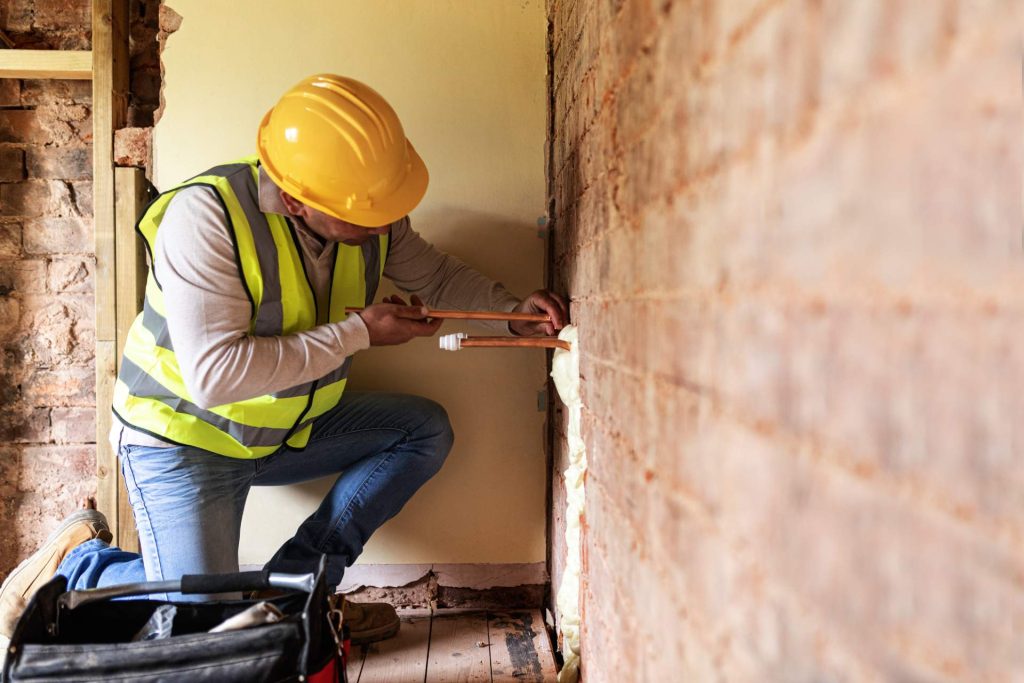
What Should You Do Before Accepting?
Before agreeing to a significant repair, review the proposal and preserve evidence of the defect.
If the problem is substantial, consider getting an independent inspection or expert opinion.
Read any release or settlement agreement carefully.
Confirm the repair scope, materials, responsible contractors, timeline, restoration obligations, and warranty for the repair.
Also consider whether the repair affects other potential claims or damages.
If you are uncertain whether the builder’s proposal is a reasonable repair or a settlement designed to close the entire matter, having the documents reviewed before signing can be valuable.
How a Nevada Construction Defect Attorney Can Help
A construction defect attorney can evaluate the builder’s proposal alongside the evidence concerning the defect.
That review can help determine whether the proposed repair appears to address the underlying problem, whether additional investigation is appropriate, and whether a settlement or release would affect your rights.
For homeowners in Las Vegas and Reno, this can be particularly important when dealing with structural defects, water intrusion, roofing problems, stucco failures, foundation issues, or defects affecting multiple components of a new home.
The goal is not necessarily to reject a builder’s repair.
The goal is to make sure you understand what you are accepting and what rights remain afterward.
Frequently Asked Questions
Not automatically. A repair may be appropriate, but you should review the proposed scope, cause of the defect, repair method, documentation, timeline, and any release or settlement language before agreeing.
An election to repair under NRS 40.648 may not be conditioned on a release of liability. However, a separate settlement agreement can raise different legal issues, so the exact document should be reviewed before signing.
For covered construction-defect claims, Nevada law requires a claimant to allow an inspection and a reasonable opportunity to repair when the contractor elects to repair before commencing the covered action.
Under NRS 40.648, repairs generally must be completed within 105 days after notice is received when the notice comes from four or fewer owners, or 150 days when the notice comes from five or more owners or a homeowners’ association representative, unless the parties agree to an extension or another time is established as permitted by law.
Document the condition and the repair work. If the underlying defect remains or the repair creates additional problems, further legal or technical evaluation may be appropriate. Do not assume that a temporary cosmetic improvement means the construction defect has been resolved.
Potentially. Under NRS 40.650, unreasonably rejecting a reasonable written settlement offer and later bringing a covered construction-defect action can affect attorney’s fees and costs.
About Milan Chatterjee
This article was prepared by Milan Chatterjee, a Nevada and California licensed attorney and founder of My Real Estate Lawyer, a real estate law practice dedicated to protecting property owners, investors, homeowners, businesses, and other clients throughout Nevada.
Milan represents clients in matters involving construction defect litigation, real estate disputes, purchase and sale agreements, property transfers, title disputes, partition actions, boundary and easement disputes, landlord-tenant matters, HOA disputes, and complex real estate ownership conflicts.
He earned his Juris Doctor from UCLA School of Law and studied at New York University School of Law as a visiting student. Before entering private practice, he served as Associate Compliance Counsel at Las Vegas Sands Corporation, where he advised on corporate governance, regulatory compliance, investigations, and risk management.
Today, through My Real Estate Lawyer, Milan helps homeowners, buyers, investors, sellers, and property owners throughout Las Vegas, Reno, and Nevada navigate complex real estate disputes and protect their property rights.
Need Help Reviewing a Builder’s Repair Offer?
A builder’s willingness to repair a defect can be a positive development, but the proposed repair should be evaluated carefully before you sign a settlement, release, or other document.
For more information about construction defect claims and your legal options, visit the Construction Defect Litigation practice page.
Conclusion
If your Nevada builder has offered to repair a construction defect, do not automatically reject the offer but do not automatically sign it either.
Nevada law gives contractors an opportunity to inspect and, in applicable cases, repair construction defects. It also establishes requirements governing how elected repairs are performed and provides that an election to repair under NRS 40.648 cannot be conditioned on a release of liability.
The right question is not simply whether the builder is willing to make repairs.
The question is whether the proposed repair actually addresses the defect, protects the condition of your home, documents what was done, and preserves your legal rights.
Before signing a release, accepting a settlement, or treating a serious defect as resolved, have the proposal evaluated carefully.

Get Immediate Legal Help
Free, confidential. We respond within minutes.
Related Blogs
