Encroachment Disputes in Nevada: When a Neighbor’s Structure Crosses Your Line

By Milan Chatterjee | Founding Attorney, Milan Legal

A property line can look simple on a map, but determining exactly where one parcel ends and another begins can become surprisingly complicated in the real world. A fence may have been installed several feet away from the actual boundary. A driveway may extend onto a neighboring parcel. A retaining wall, garage, shed, patio, or other structure may cross a property line without either owner realizing it.
These situations are known as encroachments, and they can create serious disputes between neighboring property owners.
An encroachment may initially seem like a minor inconvenience. However, the issue can become much more significant when a property is sold, refinanced, developed, inherited, or subjected to a new survey. What began as a misplaced fence can eventually involve title issues, easements, adverse possession claims, property value concerns, and real estate litigation.
For homeowners in Las Vegas and Reno, understanding how to identify and address an encroachment can help prevent a boundary disagreement from becoming a much larger legal problem.
What Is a Property Encroachment?
An encroachment generally occurs when a physical improvement associated with one property extends onto another property without the appropriate legal authorization.
Common examples include a neighbor’s fence extending across the property line, a garage partially constructed on an adjoining parcel, or a driveway that crosses onto neighboring land.
Other potential encroachments can include:
- Retaining walls
- Sheds
- Patios
- Decks
- Landscaping
- Irrigation systems
- Swimming pools
- Concrete slabs
- Utility improvements
Not every structure that crosses a property boundary is necessarily unlawful. A recorded easement, license, boundary agreement, or another legal arrangement may authorize the use.
The first step is therefore to determine where the legal boundary is and what rights, if any, exist over the disputed area.
Why You Should Not Assume a Fence Marks the Property Line
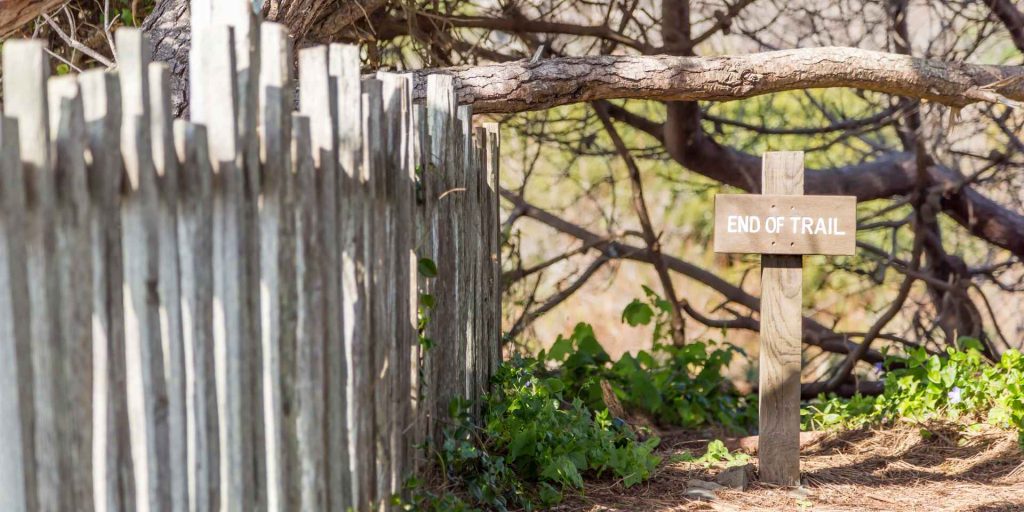
One of the most common causes of encroachment disputes is the assumption that an existing fence represents the legal property boundary.
That assumption can be incorrect.
A fence may have been installed by a previous owner based on an old survey, an inaccurate measurement, a contractor’s mistake, or a simple misunderstanding between neighbors.
The same problem can occur with driveways, landscaping, walls, and other improvements.
Before confronting a neighbor about an alleged encroachment, a property owner should determine whether the structure actually crosses the legal boundary.
A professional land survey may be necessary to establish the physical location of the property line.
How a Property Survey Can Help
A survey can provide important evidence in a boundary dispute.
A licensed surveyor may review the property’s legal description, recorded maps, monuments, existing surveys, and other relevant information to determine the location of the boundary.
The survey may identify whether a fence, driveway, wall, or structure crosses the property line and, if so, approximately how far it extends.
However, a survey does not necessarily resolve every legal issue.
For example, even if a survey establishes that a structure crosses the boundary, additional questions may remain concerning:
- Easement rights
- Historical agreements
- Adverse possession
- Permission from previous owners
- Recorded title documents
- Boundary agreements
This is why a significant encroachment dispute may require both surveying evidence and legal analysis.
Think a Neighbor’s Structure Crosses Your Property Line?
Think a neighbor’s fence, wall, driveway, or structure crosses onto your property? Establish the facts and understand your legal options before the dispute escalates.
What Should You Do When You Discover an Encroachment?
Discovering an encroachment can be frustrating, particularly when the improvement has existed for years.
The first step should generally be documentation rather than confrontation.
Take photographs of the structure and preserve copies of your deed, surveys, property records, and other relevant documents.
If the location of the boundary is uncertain, obtaining a professional survey can help establish the facts.
It is also important to avoid immediately damaging or removing the neighbor’s structure. Even when an encroachment appears obvious, the neighboring owner may claim an easement, permission, historical boundary agreement, or another legal right.
Taking unilateral action can turn a boundary dispute into an additional legal conflict.
Can a Neighbor Acquire Rights Over an Encroached Area?
A long-standing encroachment can raise questions about whether the neighboring owner has acquired some form of legal right to use or possess the affected portion of land.
One potential issue is adverse possession.
However, an old fence or structure does not automatically transfer ownership to the neighboring property owner.
Adverse possession involves specific legal requirements, and whether those requirements have been satisfied depends on the facts and applicable Nevada law.
Other legal theories may also become relevant, including easements or agreements between previous owners.
Because these issues can affect actual ownership rights, property owners should obtain legal advice before assuming that an encroachment is either legally harmless or automatically establishes ownership for the neighbor.
Can You Remove a Neighbor’s Encroaching Structure Yourself?
Property owners should be extremely cautious about attempting to resolve an encroachment through self-help.
Even if a survey indicates that a neighbor’s structure extends onto your property, physically removing, damaging, or relocating the structure can create additional legal complications.
A more appropriate approach is generally to determine:
- Where the legal property boundary lies.
- Whether an actual encroachment exists.
- Whether the neighbor has a legal right to use the affected area.
- Whether the parties can negotiate a solution.
- What legal remedies may be available if an agreement cannot be reached.
Depending on the circumstances, the solution could involve relocating the structure, creating a formal easement, negotiating a boundary agreement, or pursuing litigation.
Protect Your Property Rights
An unresolved encroachment can affect your property’s use, value, and future sale. Legal guidance can help determine the appropriate way to protect your property rights.
Common Types of Encroachment Disputes in Las Vegas
Encroachments can occur in virtually any type of residential or commercial property.
Fence Encroachments
Fences are among the most common sources of boundary disputes. A fence may appear to divide two properties correctly while actually sitting inside one owner’s parcel.
Even a relatively small encroachment can become important when the property is sold or developed.
Driveway Encroachments
Driveways may cross property boundaries because of unusual lot configurations, historical construction, or incorrect assumptions about the location of the boundary.
Building Encroachments
Garages, additions, sheds, patios, and other structures can partially extend across a property line.
Building encroachments may be more difficult to resolve because moving the structure can be expensive or impractical.
Landscaping Encroachments
Trees, irrigation systems, retaining walls, and other landscaping improvements can also cross property boundaries.
The legal significance of an encroachment depends on the circumstances and the rights associated with the affected property.
What If the Encroachment Existed Before You Bought the Property?
A buyer may discover an encroachment only after purchasing the property.
This can occur when an existing fence, driveway, or structure appears to conform to the property boundaries but a later survey reveals otherwise.
The buyer may then need to investigate whether:
- The seller knew about the encroachment.
- The encroachment was disclosed.
- A previous survey identified it.
- Title insurance provides any applicable coverage.
- A recorded easement exists.
- The purchase agreement addressed boundary conditions.
This is one reason careful real estate due diligence is important before purchasing property.
How Encroachments Can Affect Property Value
An encroachment may affect more than the relationship between neighbors.
A disputed boundary can affect the practical use, marketability, and perceived value of real estate.
For example, an encroaching structure may prevent the owner from constructing an addition, installing a fence, expanding a driveway, or otherwise using the affected portion of the property as intended.
A future buyer may also become concerned if a title or survey review reveals an unresolved boundary issue.
Resolving the dispute early can therefore help protect both the owner’s current property rights and the property’s future marketability.
Why Early Resolution Matters
Boundary disputes rarely become easier when ignored.
An encroaching structure may remain in place for years, the neighboring property may change ownership, and additional improvements may be constructed around the disputed area.
What begins as a small fence dispute can eventually become a complex question involving multiple property owners and competing legal claims.
Early documentation, professional surveying, and legal review can help identify potential solutions before the dispute becomes more difficult or expensive to resolve.
Easements and Encroachment Agreements
Not every encroachment needs to end with the removal of the structure. In some circumstances, the property owners may determine that the most practical solution is to formalize the existing use through an easement or another written agreement.
An easement is a legal interest that can provide a person with a right to use or enjoy another person’s real property without owning the property itself. Nevada’s current easement statutes recognize, among other things, appurtenant easements, easements in gross, and rights of way.
For example, if a neighbor’s driveway has crossed a small portion of your property for many years and relocating it would be extremely expensive, the parties might explore whether a properly documented easement could resolve the issue.
However, an easement should not be created casually. The agreement should clearly identify the affected property, permitted use, maintenance responsibilities, duration, and other relevant rights and obligations.
A properly documented agreement can provide certainty to both property owners and may make future sales easier.
Boundary Agreements and Negotiated Solutions
Some encroachment disputes can be resolved through negotiation rather than litigation.
Depending on the circumstances, the parties may consider solutions such as:
- Relocating the fence or structure.
- Creating an easement.
- Entering into a boundary-line agreement.
- Adjusting the boundary between the parcels where legally permitted.
- Transferring the affected portion of land.
- Agreeing on maintenance and access responsibilities.
Nevada law specifically provides a mechanism for certain boundary-line adjustments between adjoining parcels without creating additional parcels, subject to applicable approval and statutory requirements.
The best solution depends on the nature of the encroachment, the value of the affected property, the parties’ objectives, and the available legal documentation.
A negotiated solution can sometimes preserve a good neighbor relationship while eliminating uncertainty about the property boundary.
When Encroachment Litigation May Be Necessary
Not every neighbor will agree to relocate a structure or negotiate an easement.
Litigation may become necessary when a property owner believes the encroachment materially interferes with their property rights and the parties cannot reach an acceptable resolution.
A legal action involving real property may address questions such as:
- Who owns the disputed area?
- Where is the legal boundary?
- Does an easement exist?
- Has a prescriptive right been established?
- Has adverse possession been claimed?
- Is the structure unlawfully occupying another parcel?
- What remedy should be ordered?
Nevada law provides procedures for actions involving conflicting claims to real property, including actions against adverse claimants.
The appropriate legal claim and remedy will depend on the facts of the dispute.
Potential Legal Remedies for an Encroachment
The appropriate remedy depends on the circumstances and the legal rights established by the evidence.
Possible solutions may include requiring the encroaching structure to be removed or relocated, establishing an easement, resolving the boundary through an agreement, or obtaining judicial relief concerning ownership or possession.
In some cases, the parties may negotiate a financial arrangement rather than requiring removal of a structure.
There is no single remedy that applies to every encroachment dispute.
For example, removing a small fence may be relatively straightforward, while addressing a garage that extends across a boundary could involve significant construction costs and potentially affect both properties.
The remedy should therefore be evaluated in relation to the actual legal and practical circumstances.
Adverse Possession and Long-Standing Encroachments
Long-standing encroachments deserve particular attention because they may raise adverse-possession issues.
Nevada’s adverse-possession statutes establish specific requirements. NRS 11.150, for example, provides that adverse possession is not established unless the land has been occupied and claimed continuously for five years and the required taxes have been paid or tendered for that period, in addition to other statutory requirements.
This means an old fence does not automatically mean the neighbor owns the land.
The legal analysis can involve the nature of the possession, how the area was used, whether the use was permissive, the applicable statutory requirements, and the available evidence.
If an encroachment has existed for many years, both property owners should obtain legal advice before assuming that the issue can be resolved simply by moving the structure.
What If the Neighbor Claims They Had Permission?
Permission can materially change the legal analysis.
A previous owner may have allowed a neighbor to use a portion of the property for a driveway, fence, access route, or other purpose.
The current owner may not know about that arrangement until a dispute arises.
Evidence may include:
- Written agreements
- Recorded documents
- Emails or letters
- Statements from previous owners
- Historical surveys
- Property records
- Evidence of how the parties treated the property
This is another reason why a boundary dispute should not be evaluated solely by looking at a current fence or structure.
The history of the property may matter just as much as its present physical condition.
How a Nevada Real Estate Attorney Can Help
Encroachment disputes can involve several areas of real estate law at the same time.
A Nevada real estate attorney can help property owners:
- Review deeds and legal descriptions.
- Evaluate surveys and boundary evidence.
- Investigate recorded easements.
- Analyze potential adverse-possession issues.
- Review historical agreements.
- Negotiate with neighboring property owners.
- Prepare boundary or easement agreements.
- Evaluate potential litigation.
- Pursue appropriate judicial remedies when necessary.
An attorney can also help determine whether the dispute is actually an encroachment issue or whether another property-rights doctrine better explains the parties’ competing claims.
This distinction can be important because choosing the wrong legal approach may delay resolution and increase costs.

Preventing Encroachment Problems When Buying Property
Buyers can reduce the risk of inheriting a boundary dispute by conducting appropriate due diligence before closing.
A buyer should consider reviewing the property’s:
- Legal description
- Existing survey
- Recorded easements
- Title report
- Plat or subdivision map
- Visible fences and structures
- Driveways and access routes
- Boundary markers
If the physical condition of the property appears inconsistent with the legal documents, the issue should be investigated before the transaction closes.
This is especially important when purchasing older homes or properties with additions, detached structures, unusual lot configurations, or long-standing fences.
Addressing a boundary problem during negotiations is often easier than attempting to resolve it after becoming the owner.
Encroachment Disputes and Future Property Sales
An unresolved encroachment can become a problem when either property is sold.
A future buyer may discover the issue during a survey or title review and demand that it be resolved before closing.
The dispute could then affect:
- Marketability
- Negotiations
- Financing
- Title requirements
- Closing timelines
- Property value
Resolving the issue while the current owners are still able to communicate may therefore provide a significant practical advantage.
A properly documented easement or boundary agreement can also provide greater certainty for future owners, provided it is legally appropriate and properly documented.
Why Early Legal Review Matters
Property boundaries are not something homeowners should resolve solely through assumptions or verbal agreements.
A neighbor may genuinely believe that a fence is correctly positioned. The other owner may have a survey showing otherwise. Both parties can act in good faith while still having fundamentally different understandings of their property rights.
Early legal review can help separate the factual questions from the legal questions.
The goal is not necessarily to start a lawsuit. In many cases, understanding the legal position first makes negotiation more productive and may create an opportunity for a practical settlement.
Frequently Asked Questions
An encroachment generally occurs when a structure or improvement associated with one property extends onto another property without the appropriate legal authorization.
A professional boundary survey can help establish the location of the property line. Deeds, legal descriptions, recorded maps, prior surveys, and other property records may also be relevant.
Not necessarily. A fence may have been installed incorrectly or based on an inaccurate understanding of the boundary. The legal description and other reliable evidence should be reviewed.
An old fence does not automatically transfer ownership. However, a long-standing encroachment may raise adverse-possession or other property-rights issues that require analysis under Nevada law.
Property owners should avoid taking unilateral action without first understanding their legal rights and any applicable easements or other claims. Removing or damaging a structure could create additional legal disputes.
If the dispute involves a significant structure, ownership claim, easement, adverse possession, or disagreement with a neighbor, consulting a real estate attorney can help you understand the available options and protect your property rights.
About Milan Chatterjee
This article was prepared by Milan Chatterjee, a Nevada and California licensed attorney and founder of My Real Estate Lawyer, a real estate law practice dedicated to protecting property owners, investors, landlords, homeowners, businesses, and community associations throughout Nevada.
Milan represents clients in matters involving property boundary disputes, encroachments, easements, purchase and sale agreements, property transfers, title disputes, landlord-tenant matters, HOA disputes, foreclosure matters, and complex real estate litigation.
He earned his Juris Doctor from UCLA School of Law and studied at New York University School of Law as a visiting student. Before entering private practice, he served as Associate Compliance Counsel at Las Vegas Sands Corporation, where he advised on corporate governance, regulatory compliance, investigations, and risk management.
Today, through My Real Estate Lawyer, Milan helps property owners, buyers, sellers, investors, and businesses throughout Las Vegas, Reno, and Nevada protect their property rights and resolve complex real estate disputes.
Need Help With a Property Encroachment?
If a neighbor’s structure crosses your property line, do not assume that the issue will resolve itself. A survey, title review, and legal analysis can help determine what rights you have and what options are available.
My Real Estate Lawyer assists property owners throughout Las Vegas, Reno, and Nevada with boundary disputes, encroachments, easements, title issues, and real estate litigation.
Conclusion
Encroachment disputes in Nevada can begin with something as simple as a misplaced fence but develop into complex property-rights disputes involving surveys, easements, adverse possession, title issues, and litigation.
The first step is to determine where the legal boundary actually lies. From there, property owners should investigate whether an easement, agreement, historical permission, or other legal right affects the disputed area.
Nevada law provides specific rules governing adverse possession and real-property rights, so an old fence or structure should not automatically be treated as evidence that ownership has changed.
In many cases, a negotiated solution may be possible. When the parties cannot agree, however, legal action may be necessary to protect ownership and possession rights.
If a neighbor’s fence, driveway, wall, garage, or other structure crosses onto your property in Las Vegas, Reno, or elsewhere in Nevada, consulting an experienced real estate attorney can help you understand your rights and determine the most appropriate path forward.

Get Immediate Legal Help
Free, confidential. We respond within minutes.
Related Blogs
